Minneapolis Commercial Printing
Request a quote, upload your print files, or call MSE Printing for business cards, brochures, flyers, signs, banners, labels, packaging, direct mail, and commercial printing in Minneapolis and the Twin Cities.
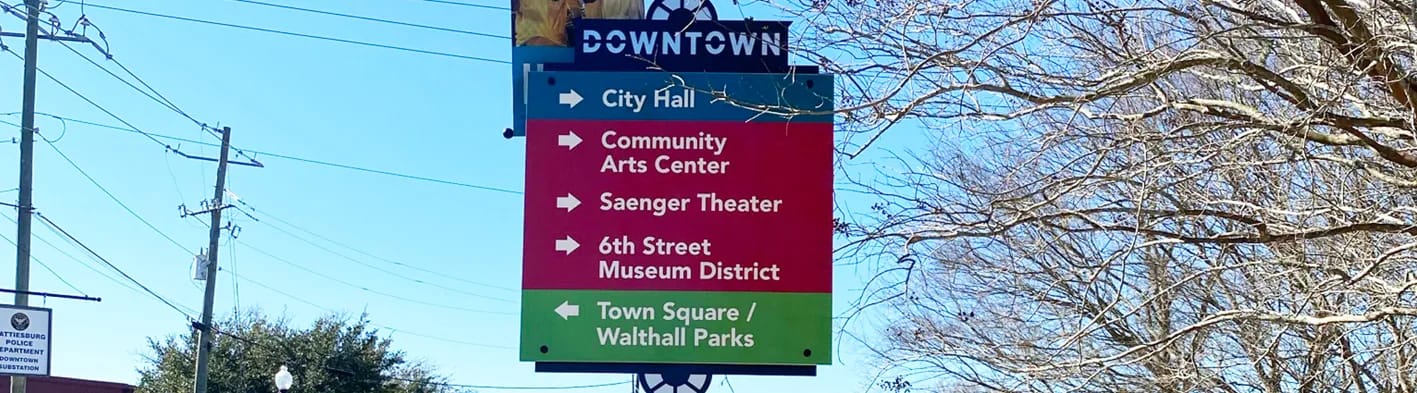
ADA-compliant wayfinding signs are essential for safe, inclusive navigation in public and commercial spaces. At MSE Printing, we design high-quality signage that meets legal standards and enhances your brand.
Request a Quote in Minneapolis, MN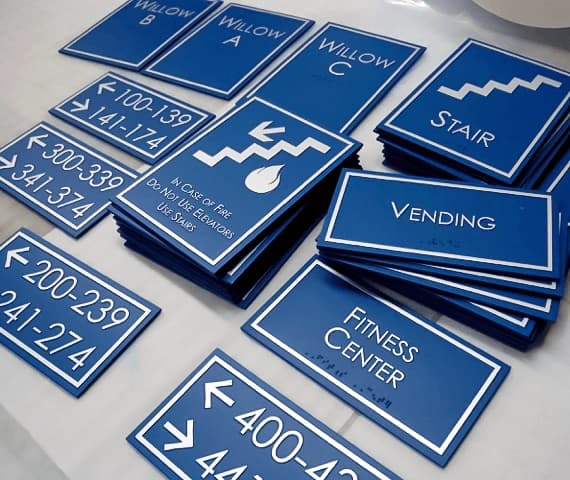
Properly executed ADA & wayfinding signage goes beyond functional pointers—it ensures an inclusive, unified experience for everyone who steps into your space. Here’s how these signs can redefine how people experience your facility:
At MSE Printing, we combine meticulous attention to detail with creative flair to produce signage that is both compliant and captivating. Our experts stay current on ADA guidelines, ensuring every sign—from tactile lettering to braille—is accurately implemented. By blending these technical requirements with your unique design aesthetic, we create a seamless navigation experience that aligns with your brand.
A: Our designers strictly follow ADA Title III and ICC A117.1 standards. We audit every detail: 5/8” minimum Braille dot height, 35% minimum color contrast between text/background, and non-glare finishes. Mounting heights are calibrated to 48–60 inches above floor level for tactile elements, with pictograms sized to 6” minimum. We also conduct virtual compliance reviews using 3D mockups to simulate sightlines and accessibility pathways before production.
A: Optimal placement includes: 1) Within 18 inches of doorways for room identifiers, 2) At every directional change in corridors, 3) Adjacent to elevators with floor-specific maps, and 4) Near stairwells with tactile floor numbers. For large campuses, we recommend overhead “You Are Here” maps at building entrances and QR-code-linked digital directories that sync with mobile apps. Illuminated signs are ideal for low-light areas like parking garages.
A: Yes. Our large-format capabilities include 4’x8’ building directories with UV-cured inks for fade resistance, 3D tactile maps for visually impaired users, and floor-to-ceiling wall graphics depicting facility layouts. We use substrates like PVC-free Sintra or tempered glass for high-traffic areas. For dynamic spaces, we offer modular magnetic panels or digital screens that update in real-time via CMS integration.
A: Our design team merges compliance with creativity. Services include ADA-compliant typography selection (e.g., Sans Serif fonts like Helvetica), tactile element spacing simulations, and color palette optimization for low-vision users. We’ll align symbols with ANSI standards while incorporating your logo, brand colors, and architectural motifs. Clients receive 3D renderings and material samples to approve tactile finishes like sandblasted bronze or etched acrylic.
A: Minneapolis-based clients receive full-service installation, including ADA-compliant mounting hardware, laser leveling for precise alignment, and post-installation inspections. For DIY projects, we provide templates with pre-marked drill points, tamper-proof screws, and video tutorials. Complex projects like multi-story hospitals may include phased installation schedules to minimize facility disruption.
A: Yes. We offer eco-conscious materials like recycled aluminum composite, low-VOC adhesives, and biodegradable Braille inserts. For temporary events, reusable magnetic signage reduces waste. Our GREENGUARD Gold-certified options ensure indoor air quality compliance in schools and healthcare facilities.
A: Tactile elements require minimal upkeep. Use a soft microfiber cloth and mild detergent—avoid abrasives. For photoluminescent signs, ensure exposure to 50+ lux of light for 60 minutes daily. We provide annual maintenance checklists and replacement parts like Braille domes or anti-graffiti laminate overlays.
A: Absolutely. We integrate NFC tags for audio descriptions, QR codes linking to accessibility apps, and RFID-enabled signs that interact with wheelchairs’ navigation systems. Digital kiosks can include screen readers, language selectors, or emergency alert integrations.
A: Standard production takes 10–14 business days. Rush services (5–7 days) incur a 20% fee. International shipping varies: 3–5 days for Canada, 7–14 days for EU/Asia. Critical projects may qualify for our 72-hour emergency service, which includes expedited material sourcing and dedicated production lines.
A: Yes. We design multilingual signs using ADA-compliant layouts, with primary language at the top and secondary translations below. Braille can be customized for language-specific contractions. For global clients, we collaborate with certified translators to ensure accuracy in languages like Spanish, Mandarin, or Arabic.
A: Contact us within 48 hours of delivery with photos. For errors on our end, we’ll rush a corrected replacement. Damage during DIY installation? We offer repair kits with color-matched touch-up paint and replacement Braille strips. Lifetime warranties cover peeling, fading, or tactile element detachment.
A: We specialize in a full spectrum of ADA-compliant and wayfinding solutions, including tactile room identifiers with Grade 2 Braille, photoluminescent exit signs, elevator floor indicators, and restroom designations. For wayfinding, we design directional arrows with high-contrast color schemes, overhead corridor markers, stairwell guidance systems, and interactive digital kiosks. Our facility maps are crafted for clarity, using scalable vector graphics to highlight restrooms, exits, elevators, and emergency routes. Materials range from durable acrylic and aluminum composite to antimicrobial surfaces for healthcare settings. Custom shapes, such as curved or icon-based signs, are available to align with architectural aesthetics.
A: Our designers strictly follow ADA Title III and ICC A117.1 standards. We audit every detail: 5/8” minimum Braille dot height, 35% minimum color contrast between text/background, and non-glare finishes. Mounting heights are calibrated to 48–60 inches above floor level for tactile elements, with pictograms sized to 6” minimum. We also conduct virtual compliance reviews using 3D mockups to simulate sightlines and accessibility pathways before production.
A: Optimal placement includes: 1) Within 18 inches of doorways for room identifiers, 2) At every directional change in corridors, 3) Adjacent to elevators with floor-specific maps, and 4) Near stairwells with tactile floor numbers. For large campuses, we recommend overhead “You Are Here” maps at building entrances and QR-code-linked digital directories that sync with mobile apps. Illuminated signs are ideal for low-light areas like parking garages.
A: Yes. Our large-format capabilities include 4’x8’ building directories with UV-cured inks for fade resistance, 3D tactile maps for visually impaired users, and floor-to-ceiling wall graphics depicting facility layouts. We use substrates like PVC-free Sintra or tempered glass for high-traffic areas. For dynamic spaces, we offer modular magnetic panels or digital screens that update in real-time via CMS integration.
A: Our design team merges compliance with creativity. Services include ADA-compliant typography selection (e.g., Sans Serif fonts like Helvetica), tactile element spacing simulations, and color palette optimization for low-vision users. We’ll align symbols with ANSI standards while incorporating your logo, brand colors, and architectural motifs. Clients receive 3D renderings and material samples to approve tactile finishes like sandblasted bronze or etched acrylic.
A: Minneapolis-based clients receive full-service installation, including ADA-compliant mounting hardware, laser leveling for precise alignment, and post-installation inspections. For DIY projects, we provide templates with pre-marked drill points, tamper-proof screws, and video tutorials. Complex projects like multi-story hospitals may include phased installation schedules to minimize facility disruption.
A: Yes. We offer eco-conscious materials like recycled aluminum composite, low-VOC adhesives, and biodegradable Braille inserts. For temporary events, reusable magnetic signage reduces waste. Our GREENGUARD Gold-certified options ensure indoor air quality compliance in schools and healthcare facilities.
A: Tactile elements require minimal upkeep. Use a soft microfiber cloth and mild detergent—avoid abrasives. For photoluminescent signs, ensure exposure to 50+ lux of light for 60 minutes daily. We provide annual maintenance checklists and replacement parts like Braille domes or anti-graffiti laminate overlays.
A: Absolutely. We integrate NFC tags for audio descriptions, QR codes linking to accessibility apps, and RFID-enabled signs that interact with wheelchairs’ navigation systems. Digital kiosks can include screen readers, language selectors, or emergency alert integrations.
A: Standard production takes 10–14 business days. Rush services (5–7 days) incur a 20% fee. International shipping varies: 3–5 days for Canada, 7–14 days for EU/Asia. Critical projects may qualify for our 72-hour emergency service, which includes expedited material sourcing and dedicated production lines.
A: Yes. We design multilingual signs using ADA-compliant layouts, with primary language at the top and secondary translations below. Braille can be customized for language-specific contractions. For global clients, we collaborate with certified translators to ensure accuracy in languages like Spanish, Mandarin, or Arabic.
A: Contact us within 48 hours of delivery with photos. For errors on our end, we’ll rush a corrected replacement. Damage during DIY installation? We offer repair kits with color-matched touch-up paint and replacement Braille strips. Lifetime warranties cover peeling, fading, or tactile element detachment.
By investing in professionally crafted ADA & wayfinding signs, you prioritize accessibility and reinforce brand integrity across every inch of your facility. MSE Printing Contact us at info@mseprinting.com or call 763-542-8812 today to discuss your ADA & wayfinding signage needs.
Empower your space—let our carefully designed signs shape an inclusive, intuitive environment for every guest.